I received a question in the comments from this post on information and making connections...
I keep seeing in your posts (and others like it) the consensus to give up eggs as well. I've been a vege for many years now (maybe 17yrs now) and I love eggs. But I've never had any guilt issues with buying eggs from free range farms. They don't harm anyone, the animals have good lives and the quality of the eggs are better. Rather than give up something which is a very good source of essential proteins etc., couldn't you just look into sourcing or using your own? Why the objection to (properly cared for) free range eggs?
I am very happy to answer this. I love discussion and to share our thoughts and perspective. I am going to talk some general answers and then my personal reasons.
There are many good reasons to give up eggs. There are health reasons (cholesterol and fat) and environmental reasons. There are many other readily available and much more healthful options for protein, so that is not really a good reason to me to keep eating eggs. There are also many other options for replacing eggs in recipes so I do not feel that they are needed there either.
In a better world, the eggs that hens lay would be naturally gathered and the hens would have lovely lives living outdoors, chasing bugs and having dust baths. I'm not going to go into the whole issue of keeping and managing the life cycles of animals, no matter how benign we may be as caretakers.
That is what free-range should mean.
However, almost all commercial eggs that are marketed as "free-range" or "cage-free" are not, especially here in the US. Not really. It is just a misleading marketing term. I feel that egg farms and the animals there go through more suffering than even animals raised for meat. The hens may not be crammed 7 to a wire cage the size of a file drawer they way most egg factory farms do. Instead they are crammed into airless, sunless buildings many times with their beaks and combs sliced off, little health care or even good food and water. Not to mention the abuse many factory farm workers do to these sensitive animals such as throwing, kicking, stomping on them, etc.
They are manipulated with lights and temperature to lay eggs year round until their bodies are totally spent. Their lifespans are a fraction of the 7 or so years a hen would live naturally. When they are not able to lay eggs anymore their bodies are ground up for lesser food sources like being fed to other chickens or dog/cat food.
Other reasons to not support the egg industry are the breeding practices. Hens are bred to produce and/or be meat. Many cannot even stand up under their own weight. Their bodies and legs become so deformed they cannot stand or walk. And when they drop to the ground or the floor of their cage, they are left to suffer and die. Workers throw them into trashcans, often still struggling to live, like rubbish.
Another "by-product" of the egg industry often overlooked, no matter how "humane", are the male chicks. From a purely statistical view about 50% of the chicks born will be male... Roosters. An egg company has no need for all of these millions of baby male chicks so what do they do? Well sometimes they throw them in to trashcans to suffer and suffocate. Sometimes they, as you can see here, throw them alive into giant grinders.
So to sum up the industry-related reasons, I think you should avoid eggs:
- Grinding up alive millions of baby male chicks
- Short suffering-filled lifespans
- Genetic manipulation
- No real free-range lifestyle
- No health care
- Physical abuse
- When they stop laying they are just killed
But let's say you find a farmer who does truly give his/her birds a free-range life? There are three questions you need to ask. 1) What happens to the hens they stop laying? 2) Where did he get the chicks from to start his flock? and 3) What happens to the male birds born when we wants to increase his flock?
#1
Will this person kill the hens when they stop laying eggs? Yes or No? How can you be sure?
#2
Did he order baby chicks from a breeder? Many people, even backyard chicken owners do this. This is just as bad. Animals are "produced" for this and males are still discarded. Many baby chicks die in transport. Still creating and contributing to suffering.
#3
What happens if he/she orders eggs to raise or decides to let his hens hatch their eggs? What happens if he gets a bunch of male chicks? It's hard to keep all of them in a small space. It can be done but males don't produce eggs so many farmers would not see the value in them... and kill them.
Isn't just easier to stop eating eggs or food with eggs in them? I think so!
And let me be clear, I am speaking this from the standpoint of someone who has 2 hens and could actually be eating eggs if I wanted too. But I don't. Mostly because I don't feel the need to any more.
Sure there is an ideal scenario. I think we have it actually.
We have two hens who were rescues. We didn't buy chicks or eggs to raise. We adopted them because they needed a home and we had the space and the ability to care for them. They live a natural life and will not be killed when they stop laying. They are not manipulated to keep laying in the winter through lights or temperature. They get the best food and health care we can give them. Our neighbors get probably the best eggs they'll ever find.
At the end of the day, for us, it's all about eliminating suffering, living lighter on the earth and living a healthy life. We aren't looking for loopholes. I think that consistency helps us and helps share what we stand for too.
I love to hear more from you and any other questions you may have.
Thanks!
Thursday, August 12, 2010


Monday, August 9, 2010
Marketing Veganism

This is such a great article that I wanted to reprint it here. Bolding is my own.
Marketing Veganism
Posted on 2010/08/06 by Know Thank You
As vegans we tend to focus on a short list of things that get us really excited: great food that doesn’t have some horrible ingredient, politicians or scientific reports or movies that support our choices, cool clothing with a message we like, there’s all kinds of things that get our hearts pounding and our keyboards melting. And it’s great, because the vegan cookies and the factory farm movies and the Nail The Vivisectors t-shirts will be embraced by all of us. By all of our little 1% of the population.
So much of what we produce, what we wear, what we write, and say, and do, separates veganism from what everyone else is doing. And that’s kind of the point, isn’t it, but it also creates an “us against them” atmosphere that’s not always welcoming to everybody else. And what we really want to do is bring everybody else here, isn’t it? A lot of the time though we come across as preachy and judgmental. While everyone else is out there trying their best to ignore the terrible realities, there we go shoving it in their faces. Even if we have our facts right (and let’s face it, we do), not everyone else shares our morals. They are entitled to their own, even if we disagree with them. And a lot of the time, our in-your-face tactics turn people off. Rather than inform them, they get defensive, they ignore us, and our whole message is lost. The public often perceives us as being anti-establishment, and as opposing a lot of the things that they hold dear.
What we need to do is show the public that vegans aren’t anti-establishment, we’re pro-establishment! We love the establishment, because we love the public. We’re the public too! We love for the public to get what they want, and we love the companies that produce those things. Remember, every vegan business you can think of, without exception, operates within the laws and practices of modern business. Vegan businesses use those laws and practices to provide compassionate products and services to us and other people around the globe. We can’t possibly afford to be anti-establishment; we need to give vegan businesses all the support we can, so they can grow and show the rest of the establishment how it should be done. If we stop being anti-establishment, vegans can start being the leaders of positive change within the establishment.
So if a lot of vegan products, vegan films, vegan writing, and more make us appear separate from the rest of the world, how do we get back in? Back to where we all came from so we can talk to people there and bring them out? Basically, how do we get our message of compassion to the other 99% of America? How do we appeal to mainstream consumers – like us?
This used to be easy. Years ago the majority of American households were white, suburban, 2.4 rug rats, and got most of their news from the TV set. If we still had one type of audience now we could figure out pretty easily how to appeal to them. But that stereotypical American family began to change a few decades ago, and there’s no longer any average American household or average American consumer. The buying public now includes a much wider variety of ethnic groups, ages, professions, family situations, and other criteria that all impact the choices people make. What we want is for everyone to choose compassion, environment, and health, but unfortunately, the vast majority of people aren’t looking for these things.
When most consumers shop for window cleaning fluid, they just look at price and grab what’s on sale in the store. Occasionally they’ll have a brand preference. They don’t consider the hazardous chemicals, or the plastic bottle, or the fact that they could simply use vinegar instead and save even more money. The consumer wants to save money and doesn’t want to have to think about it.
When most consumers shop for bread, they usually pick a brand they prefer because they like the combination of price and flavor. There may be other brands with better flavor, but they often won’t buy them unless they’re on sale. The ingredients are almost never checked. They stick with a brand they know, despite any negative impact the production or consumption may have.
I’m vastly simplifying this, but you get the point. If you want to sell a vegan product to a random person who’s not vegan, you are likely to have greater success by highlighting qualities of the product that he or she can most relate to. If you’re selling window cleaner, try some alternate ads highlighting the wonderful scent, sparkle, or offering a special low price. If you’re selling vegan bread, try some alternate ads highlighting the wonderful flavor, freshness, or offering a special low price. Speak in terms they understand.
Remember the things that draw most people to veganism? Compassion, environment, and health. For many years we have shown a vegan lifestyle as a very effective way to both attain positive results in each of these areas and to address related chronic problems. The big stumbling block is that nearly 100% of our outreach hasn’t shown that we are successfully attaining positive results – we’re healthier, we recycle, we rescue etc etc – our outreach has instead highlighted that we vegans are locked in a fight with all the related chronic problems. Your average consumer isn’t looking for a fight. He doesn’t want to stand up to corporations. He doesn’t want to read labels. He doesn’t want to boycott. He doesn’t want to protest. He doesn’t want to hand out leaflets. He wants things easy. He doesn’t even want to have to think. Being explained very clearly that something is total nonsense and even life-threatening doesn’t stop people from doing it, in fact that can actually propel some people to make that choice. After years of campaigning and government warnings, people still start smoking each day and smoking related deaths continue. Despite how remarkably stupid they are, the senselessly violent stunts in films like Jackass are reproduced by people, and each year people die in the process. It seems as though people actually avoid knowledge, as if it’s too much work, and our media perpetuates this. Any television news program, once advertising, entertainment, opinion, and chit-chat have been removed, leaves very few – if any – facts for us to have to bother with. Mainstream consumers aren’t being informed; they’re being encouraged how to think.
Look at the advertising on television now and really cut it apart. You’ll find that most ads don’t tell us much about the product at all. Instead, they try to tell us about the people that use the product. We are meant to identify with those people or desire to be one of those people, and we can be! All we have to do is buy the product. Once again, the ads don’t inform, they create desire. What we need to do then is a better job of making veganism desirable. We all know that each and every one of us is healthier, is kinder to the environment, and just by choosing a vegan diet we save dozens of lives every year. Those are the kinds of messages that mainstream consumers are more accustomed to. Keeping things simple, positive, “new and improved,” and desirable: that’s the kind of message that drives decisions.
There will ALWAYS be a place for the hard-hitting exposure that some hard-working vegans give to abusive corporations and individuals. That type of abuse should not exist, and exposing it helps to bring about change. To be most effective changing the lives of mainstream America though we can learn something from the mass media that’s already doing so: do less informing of people, and more creating desire in people. “Give the customer what they want” is an overwhelmingly obvious rule of marketing. We tend to ignore that and instead put all our efforts into giving the customer what we want them to see and hear. That’s something like adults sending the kids to math class rather than healthy, compassionate people sharing their successes. Let’s tweak what we’re putting out there – sell our product a little better – and we’ll likely find more people will buy it.
Back to me> I think the information is important but also showing that I can cook, and cook great delicious easy meals is part of how I try to showcase being vegan. That there are other options.
How else can we help show this is the desirable way to live?
Tuesday, August 3, 2010
The Soul is the Same

"The Soul is the same in all living creatures;
although the body of each is different."
- Hippocrates
Wednesday, July 21, 2010
The Story of Water
After watching Blue Gold: World Water Wars, I'm more and more focused on eliminating bottled water. We are no longer going to buy bottles for our Movie Nights and have reusable glasses that we keep in our cars (and glass straws!)
The Story of Water (by The Story of Stuff group) is a great synopsis of why bottled water is so bad for us, the environment, others and our wallets too!
It's easy reuse a cup and carry a bottle with you or find a water fountain.
Try it for a month and see how easy it is.
Tuesday, July 20, 2010
Nothing but Excess
In a time when we as an American society seem to be perched precariously on the edge of economic and political unrest, when we are being continually reminded of the huge health issues we are facing, we also seem hell-bent on driving ourselves there as quickly as possible.
I don't know if it's our perverse need to never conceed. That we feel it's better to give a big middle-finger to nutrition warnings or the fact that we can't admit that we're wrong but I am just staggered every day when I hear ever more excessive and decadent (in the degenerate, debased, debauched and self-indulgent meaning) ways.
You can't turn on a TV without hearing about some XYZ burger or triple-tier dessert. I was actually in a restaurant for a party this weekend and the "ultimate brownie" was: brownie, chocolate sauce, ice cream, nuts, whipped cream, Kahlua, etc. It was a bit crazy.
And here are two more examples...
As if the junky empty calories of Doritos were not enough... we now have Doritos Late Night All Nighter Cheeseburger flavor. They may not have trans fats but they do have "Natural Beef Flavor", whatever the hell that is, along with all the oil, milk and cheese mixed in and dumped on top.
On the high end we have ridiculous creation of disgusting proportions... the Foie Gras Loco Moco.
This concoction from a restaurant in California. This thing is beyond politically incorrect, it's disturbing. Foie gras (fatty liver), Spam (who knows what), beef patty, a fried quail egg and a reduction of foie gras.
Really, do we need this? In light of the issues with our health, do we really need this? Can it even taste that good? I mean, we're talking Spam here.
We, as individuals and as a nation, need to retrain ourselves. Learn to show a little restraint. We don't need it all, all the time, right now? Do we?
And wouldn't it be better for ourselves, the country and the world if we did?
I don't know if it's our perverse need to never conceed. That we feel it's better to give a big middle-finger to nutrition warnings or the fact that we can't admit that we're wrong but I am just staggered every day when I hear ever more excessive and decadent (in the degenerate, debased, debauched and self-indulgent meaning) ways.
You can't turn on a TV without hearing about some XYZ burger or triple-tier dessert. I was actually in a restaurant for a party this weekend and the "ultimate brownie" was: brownie, chocolate sauce, ice cream, nuts, whipped cream, Kahlua, etc. It was a bit crazy.
And here are two more examples...

As if the junky empty calories of Doritos were not enough... we now have Doritos Late Night All Nighter Cheeseburger flavor. They may not have trans fats but they do have "Natural Beef Flavor", whatever the hell that is, along with all the oil, milk and cheese mixed in and dumped on top.
On the high end we have ridiculous creation of disgusting proportions... the Foie Gras Loco Moco.

This concoction from a restaurant in California. This thing is beyond politically incorrect, it's disturbing. Foie gras (fatty liver), Spam (who knows what), beef patty, a fried quail egg and a reduction of foie gras.
Really, do we need this? In light of the issues with our health, do we really need this? Can it even taste that good? I mean, we're talking Spam here.
We, as individuals and as a nation, need to retrain ourselves. Learn to show a little restraint. We don't need it all, all the time, right now? Do we?
And wouldn't it be better for ourselves, the country and the world if we did?
Wednesday, July 14, 2010
Veggie-Versary - Two Years

Today is our Two Year Veggie-versary.
It's a sort of a bittersweet reminder because we went vegetarian (and shortly after, vegan) when Napoleon was hurt. We were lucky that he recovered but were sad when he was taken from us just a few months later.
I still grieve for him and keep his picture as the background on my phone so I can see him every day.
I miss our little man. I'm not sure if we will have the opportunity to care for a rooster again. Jake the turkey is doing so well with the girls that we are afraid of upsetting the balance in the coop. But Napoleon had such a great personality that I miss having a feisty rooster around.
Napoleon, we have you to thank and credit for our awakening. Because of you we have brought more compassion into our lives and we feel we are saving lives with each meal.
Love you.
Friday, July 2, 2010
How do you Celebrate? Let's get Grilling!

This is a weekend celebrating freedom and independence and struggle. What better time to go vegan and extend those liberties and desires to live free of suffering and fear towards all animals.

But that doesn't mean that you need to feel left out from all the yummy summer foods. In fact some of the best foods are not animal based or can include some easy substitutions.
Cow burgers = veggie or black bean burgers.
Easy to find, easy to grill, tastes just as good with all the ketchup, mustard, onions, tomatoes and lettuce.
Hot Dogs
Personally I've always found hot dogs to be disgusting in theory. Do you know what goes in those things??? Gross! Gag! But hey, I'll eat a SmartDog. Topped with ketchup and onion; those are the best! And no bug bits.
Coleslaw and Potato Salad
Use a non-egg based mayo (Vegenaise is the best!) or make a vinegar-based version. Same thing for potato salad
Apple pie and ice cream
Purely Decadent ice cream comes in a ton of flavors and is, in my opinion, better than cow's milk ice cream. I love the coconut milk options better than the soy ones, but that's just me. Apple pie can easily be made with soy milk and Earth Balance sticks instead of cow's milk butter and milk.
Corn on the cob
Slather on some Earth Balance spread and you are good to go!
Sides
All of the best sides are vegan ready - salsa and chips, roasted veggies, corn salad, Popsicles
There is no reason to cause suffering when we eat. Not to the animals, and frankly, not to us. Remember, only animal-based foods like meat, eggs and dairy have cholesterol but on top of that, grilling animal flesh is a huge cancer risk.
The Cancer Project has listed the Top Five Worst Foods to Grill and they are:
Chicken
Steak
Pork
Salmon
Hamburgers
Don't risk it! Grill a delicious portobello mushroom instead! Celebrate your freedom from poor health and Happy Fourth of July!
Photo source here
Tuesday, June 29, 2010
Still Remember
Even though it happend a few years ago and Michael Vick is out of prison and playing football again, the trauma is not over for the dogs he and his cohorts abused.
Meet Mel -
Mel is one of the dogs that was rehabilitated and adopted out but he still lives in fear... every. single. day.
I read about Mel just the other day and that sweet face and the words moved me to tears.
Richard Hunter has a new member of his household. That's him, quivering in the corner. Shaking uncontrollably. Convulsing. The 4-year-old is scared shitless.
"He lives in fear," Hunter says of his new best friend, Mel. "You would too if you'd been beating and traumatized your whole life."
Michael Vick is out of prison and back in the NFL. But the dogs he tortured - the ones he didn't kill, that is - will never escape his dark shadow.
"Mel's come a long way. We can pet him. He sleeps in bed with us," Hunter says. "But he's scarred for life. He's never barked. Never made a noise. There are times when he's just terrified."
Mel has a new canine friend now, Pumpkin, a 13 year old terrier, who helps take care of Mel...
Give the assist to Pumpkin. The two dogs hit it off, with the elder sensing the fear in his new introvert friend.
When a stranger enters Hunter's house, Mel freaks out. He grabs his monkey security blanket, slowly backs up into the corner and quivers. In front of him, standing as guard, is Pumpkin. And since Mel can't - or won't - use vocal communication, it's Pumpkin who barks for him, often waking Hunter late at night to find Mel at the back door needing a bathroom break.
You have to read the full article here. It is amazing and wonderful what the Hunter family went through to bring this sweet dog home. There is also a great article from Sports Illustrated a while back that talks about what these pups endured. Read that too.
But I couldn't just stop with writing about it here. I had to let my voice be heard by those that support Vick by employing him. I don't watch a lot of sports so boycotting is easy. That should be the first thing you do - boycott the NFL and the Eagles specifically. But I also had to write them both letters via the comment feedback sections of their sites. I wrote:
I just want you to know that we have not forgotten the evil done by Michael Vick and that there are still many many people who think you are total assholes for hiring him. The money he has paid and limited prison time he has done will never erase the abuse, horror and trauma he inflicted upon those defenseless animals.
The fact that you know his background and pay him buckets of money is beyond disgusting. I will never understand how you can live with yourselves as human beings when there are dogs like this still living with the trauma - http://blogs.dallasobserver.com/sportatorium/2010/06/one_of_michael_vicks_dogs_find.php
I will never support the NFL or your team while you support this sick individual.
Yes, it's harsh but harsh words are minor retribution for the pure evil he doled out and allowed. I hope you will feel equally enraged and let them know as well.
Meet Mel -

Mel is one of the dogs that was rehabilitated and adopted out but he still lives in fear... every. single. day.
I read about Mel just the other day and that sweet face and the words moved me to tears.
Richard Hunter has a new member of his household. That's him, quivering in the corner. Shaking uncontrollably. Convulsing. The 4-year-old is scared shitless.
"He lives in fear," Hunter says of his new best friend, Mel. "You would too if you'd been beating and traumatized your whole life."
Michael Vick is out of prison and back in the NFL. But the dogs he tortured - the ones he didn't kill, that is - will never escape his dark shadow.
"Mel's come a long way. We can pet him. He sleeps in bed with us," Hunter says. "But he's scarred for life. He's never barked. Never made a noise. There are times when he's just terrified."
Mel has a new canine friend now, Pumpkin, a 13 year old terrier, who helps take care of Mel...
Give the assist to Pumpkin. The two dogs hit it off, with the elder sensing the fear in his new introvert friend.
When a stranger enters Hunter's house, Mel freaks out. He grabs his monkey security blanket, slowly backs up into the corner and quivers. In front of him, standing as guard, is Pumpkin. And since Mel can't - or won't - use vocal communication, it's Pumpkin who barks for him, often waking Hunter late at night to find Mel at the back door needing a bathroom break.
You have to read the full article here. It is amazing and wonderful what the Hunter family went through to bring this sweet dog home. There is also a great article from Sports Illustrated a while back that talks about what these pups endured. Read that too.
But I couldn't just stop with writing about it here. I had to let my voice be heard by those that support Vick by employing him. I don't watch a lot of sports so boycotting is easy. That should be the first thing you do - boycott the NFL and the Eagles specifically. But I also had to write them both letters via the comment feedback sections of their sites. I wrote:
I just want you to know that we have not forgotten the evil done by Michael Vick and that there are still many many people who think you are total assholes for hiring him. The money he has paid and limited prison time he has done will never erase the abuse, horror and trauma he inflicted upon those defenseless animals.
The fact that you know his background and pay him buckets of money is beyond disgusting. I will never understand how you can live with yourselves as human beings when there are dogs like this still living with the trauma - http://blogs.dallasobserver.com/sportatorium/2010/06/one_of_michael_vicks_dogs_find.php
I will never support the NFL or your team while you support this sick individual.
Yes, it's harsh but harsh words are minor retribution for the pure evil he doled out and allowed. I hope you will feel equally enraged and let them know as well.
Sunday, June 20, 2010
Information Flows

I was on Facebook the other day and saw a friend's update that stated:
My son's gem of the week: "Dad, how do cows give their milk? Do they spit?"
I posted a comment on Twiter about how this was sad to me and it became a discussion between me and some of my online friends. Part of the discussion was that many people grow up not learning this information from school biology or health classes or from their parents.
We are a society that is, generally, very far removed from the sources of what we eat. And as the world becomes more and more urban (it's estimated that by 2050, 70% of the world will live in cities) there are few opportunities to connect with the plants and animals that make up what most people eat.
I will readily admit that I was as disconnected as anyone else from what I ate. I grew up in Miami, FL. I never had a garden, never raised animals for food, never visited a farm or cleaned a fish that I caught. Frankly, much of what I've learned about the life cycles of farm animals (aka the animals we eat) I've learned in the past two or so years since we brought our rescued hens, rooster, turkey and goats to come live with us.
Animals are the best teachers.
What still surprises me and makes me sad is that we don't know these things. That we are not taught them and that we have fewer and fewer opportunities to learn.
We live in a a semi-rural and traditionally agricultural area in North Carolina. The town is a mix of people who have lived here for almost 70 years and some newer residents. There are still tobacco fields dotting the area, although those are becoming harder to find. Yet, even in an area where many people have exposure to animals and farms, since we brought home our "outside" animals they've become ambassadors for their relations. And they bring up opportunities to answer questions on how animals would live in a more natural way.
For example, when we brought home Tulip and Petal, the pygmy goats, people asked if we would be utilizing their milk to drink or to make cheese. We answered "No". We will not be taking milk from them because, like cows and other mammals, they only have milk when they have babies who need it to grow. For Tulip to have milk she would have to be bred, impregnated, have babies and then have the babies taken away, for us to then take her milk for our own purposes. This will never, ever happen.
This is what happens on a enormous scale to millions of cows (and on a smaller scale to goats) every day. The dairy cows are impregnated over and over again. Their babies are taken from them right away (males to become veal, females to become more dairy cows or meat) and they're hooked up to industrial milking machines which often injure them. Now I never ate veal on "priciple" but I didn't know or connect the steps between the milk I put on my cereal and the veal calf that I refused to eat. I didn't know that my cereal milk or favorite cheese was contributing just as much to supporting the system as eating veal or a steak.
There are similar questions regarding the eggs that Meg and Gertie lay. People ask how often they lay and we respond that they lay, generally, once a day during the spring, summer and a bit into the fall. That they do lay even without a rooster around because it is their fertility cycle, so they create a egg just like women do, whether it is fertilized or not. We also say that they don't usually lay in the winter because it would be too cold to have chicks hatch during the winter to survive, so they naturally don't lay eggs then... unless they are unnaturally manipulated through lights and temperature, as factory egg farms do.
We also explain how the egg farms work. That, as you could statistically expect, about half of the chicks born on the egg farms are male. These male baby chicks are unwanted so they are thrown, alive, into grinders and either disposed of or fed to the chickens or other animals.
It's hard to fathom and yet, that is what happens and what we support when we buy eggs.
I had no idea about any of these facts just a few years ago. It makes me sad and sick that I was never taught it. I feel that I should have known. I love and was interested in animals. I was very involved in science and biology. I wanted to be a vet. Yet I never connected the dots about how they live, how they are meant to live and how the animal foods I ate came about. Why is that? And why was none of this ever taught any where? Why are we never educated about the animals that live in closest connection to our lives? If I had known these few things I probably would have made the changes I've made years earlier.
When people get to meet our animals they are often entranced (see our little friend above). They engage with them. Love their unique personalities. They want to know more and are amazed by how they live and how they act. They ask to come back to see them and play with them again.
I know how they feel. Because I'm amazed by them every day.
I think if more people where taught the truth about the animals that we use and how their lives are manipulated and twisted for our own ends and for profit that people would not want to support this. I believe that most people are kind and compassionate. That they don't want baby cows ripped from their mothers, they don't want hens to have their beaks sliced off or male chicks ground up alive because they are "trash". That the abundance of fruits, vegetables, beans and grains available to us is more than we could ever tire of.
And that the joy that comes from knowing we are not causing harm with our food choices brings us an immense satisfaction and sense of peace.
Monday, May 24, 2010
Collaborative Consumption
I'm very much in favor of Collaborative Consumption. I think it helps reduce cost and waste and brings people and, hopefully, communities together.
Part of our goal as "Less Impact Fam(ily)" is to not buy someting if we don't need it and to see if we can borrow or share it as the first option.
Collaborative Consumption Groundswell Video from rachel botsman on Vimeo.
I've seen this coming together happen after a natural disaster. What if it was something that you feel comfortable doing every day?
Friday, May 21, 2010
Grimmy Grimm Grimm
Sorry it's been kind of quiet. Work has me swamped.
In other news, we just found out our Grimmy cat has diabetes. We're trying to learn everything we can and today are going to the vet to be taught how to take her glucose levels and give her insulin shots. This will require lots of changes in the house and even for the other pets as it relates to food and feeding time so we'll see how it goes.
In some cases, cats can balance how and go into remission. We hope this will be the case for Grimmy and that a few months down the road she better.
We love our Grimmy Girl!


Wish us luck!
In other news, we just found out our Grimmy cat has diabetes. We're trying to learn everything we can and today are going to the vet to be taught how to take her glucose levels and give her insulin shots. This will require lots of changes in the house and even for the other pets as it relates to food and feeding time so we'll see how it goes.
In some cases, cats can balance how and go into remission. We hope this will be the case for Grimmy and that a few months down the road she better.
We love our Grimmy Girl!


Wish us luck!
Tuesday, May 4, 2010
Waste Not, Want Not
If we're starting with proverbs here, maybe I should say "a stitch in time saves nine" because I think a bit of planning ahead can make the dreaded meal-time debate so much easier.
First off, there are a few things you should be doing to eat well and eat well for the earth. Number one is eat local as much as you can. We love our farmer's market. We can talk to the people, know where the food comes from, ask them questions and minimze waste and packaging. Plus the food is fresher, usually less expensive and in better condition than the majority of what you can get in a grocery store.
Number two is plan your meals for the week. For a number of reasons we've been cutting down on eating out. On Sunday morning we come up with 3 - 4 meal ideas for the week and then go grocery shopping. This gives us options plus it saves us from having the "what do you want for dinner?" debate each night. It helps me when I'm rushing out the door and forgetting about lunch, saves money and cuts down on the number of trips to and from the store during the week. From stir fry to lasagna to pesto-grilled veggie pizzas, each meal is great for dinner with usually enough for lunch or even another dinner.
Number three is freeze! Once we've had our dinner, we freeze the rest of the food into single serving portions. Easy to grab for lunch or dinner, the next day or a few weeks later. This is especially handy if you make a big batch of something and you're getting bored.
If you are eating mainly plant-based (and you should be!) you are bound to end up with lots of veggie scraps - peels, cores, onion skin, etc. But don't toss them in the trash! Food waste is a HUGE issue. One that I can get into later. But let's just take a high level - while plant scraps do break down, they can't break down in a landfill wrapped in a plastic bag. So, what should you be doing to cut down on trash and this problem? Number four is Compost! We have a reclaimed pickle barrel for our composting ($15 vs $100+!) but you can do this on a much smaller scale.
But even before you get to the composting, don't waste those extra veggies or the tops of your fennel or that bunch of greens that you forgot about. Do what we do (number five) - Make vegetable stock.

Making stock from scratch is something I didn't often do until just recently. We would buy the tetra packs of the low sodium vegetable stock and use that then throw away the packaging. In the mean time we were wasting all of these vegetables too. Double waste! How lame is that?
So now we've been making our own stock. It's fun, delicious and we can control the amount of sodium in it, which as you know is always too much in the commercial kinds. And how easy is it to make stock.
Here's what you do:
Vegetables - I like to have at least a few carrots, celery (including the leafy center stalks no one likes), an onion and some garlic. Chop all of these up roughly. You can end there but use what you have. I've thrown in dark leafy greens, scallions, a few bay leaves, some coriander seeds, left over fresh herbs, turnips, corn cobs, etc.
Put some oil in the bottom of a big pot and sautee the hard veggies (carrots, onions, celery, turnips, garlic) . Sprinkle on some salt and fresh ground pepper
and cook until a bit softened. Add in your softer veggies (the greens, herbs, etc.) and pour in enough water to cover everything. I think 8 cups should be the minimum but I used 16 cups last time.
Let this come to a boil and then turn the heat down to low and let it simmer for as long as you want. You can make this in 40 minutes but I like to let mine really cook for a while. After a few hours I turn the heat off and let it come down to room temperature.
To strain it, I put some cheesecloth in my big colander so the stock is pretty clear. And that's it! Ladle it into some containers - I like to do 1 cup and 4 cup containers - and then freeze it. The stock is much more flavorful than the commercial kind. Sometimes I snack on the veggies, puree them up (take out any bay leaves) and use them in sauces or... compost them!
First off, there are a few things you should be doing to eat well and eat well for the earth. Number one is eat local as much as you can. We love our farmer's market. We can talk to the people, know where the food comes from, ask them questions and minimze waste and packaging. Plus the food is fresher, usually less expensive and in better condition than the majority of what you can get in a grocery store.
Number two is plan your meals for the week. For a number of reasons we've been cutting down on eating out. On Sunday morning we come up with 3 - 4 meal ideas for the week and then go grocery shopping. This gives us options plus it saves us from having the "what do you want for dinner?" debate each night. It helps me when I'm rushing out the door and forgetting about lunch, saves money and cuts down on the number of trips to and from the store during the week. From stir fry to lasagna to pesto-grilled veggie pizzas, each meal is great for dinner with usually enough for lunch or even another dinner.
Number three is freeze! Once we've had our dinner, we freeze the rest of the food into single serving portions. Easy to grab for lunch or dinner, the next day or a few weeks later. This is especially handy if you make a big batch of something and you're getting bored.
If you are eating mainly plant-based (and you should be!) you are bound to end up with lots of veggie scraps - peels, cores, onion skin, etc. But don't toss them in the trash! Food waste is a HUGE issue. One that I can get into later. But let's just take a high level - while plant scraps do break down, they can't break down in a landfill wrapped in a plastic bag. So, what should you be doing to cut down on trash and this problem? Number four is Compost! We have a reclaimed pickle barrel for our composting ($15 vs $100+!) but you can do this on a much smaller scale.
But even before you get to the composting, don't waste those extra veggies or the tops of your fennel or that bunch of greens that you forgot about. Do what we do (number five) - Make vegetable stock.

Making stock from scratch is something I didn't often do until just recently. We would buy the tetra packs of the low sodium vegetable stock and use that then throw away the packaging. In the mean time we were wasting all of these vegetables too. Double waste! How lame is that?
So now we've been making our own stock. It's fun, delicious and we can control the amount of sodium in it, which as you know is always too much in the commercial kinds. And how easy is it to make stock.
Here's what you do:
Vegetables - I like to have at least a few carrots, celery (including the leafy center stalks no one likes), an onion and some garlic. Chop all of these up roughly. You can end there but use what you have. I've thrown in dark leafy greens, scallions, a few bay leaves, some coriander seeds, left over fresh herbs, turnips, corn cobs, etc.
Put some oil in the bottom of a big pot and sautee the hard veggies (carrots, onions, celery, turnips, garlic) . Sprinkle on some salt and fresh ground pepper
and cook until a bit softened. Add in your softer veggies (the greens, herbs, etc.) and pour in enough water to cover everything. I think 8 cups should be the minimum but I used 16 cups last time.
Let this come to a boil and then turn the heat down to low and let it simmer for as long as you want. You can make this in 40 minutes but I like to let mine really cook for a while. After a few hours I turn the heat off and let it come down to room temperature.
To strain it, I put some cheesecloth in my big colander so the stock is pretty clear. And that's it! Ladle it into some containers - I like to do 1 cup and 4 cup containers - and then freeze it. The stock is much more flavorful than the commercial kind. Sometimes I snack on the veggies, puree them up (take out any bay leaves) and use them in sauces or... compost them!
Wednesday, April 28, 2010
The Morning Routine
When you have a house full of animals and two people who work, the morning routine can be a bit of a juggling act. We try to balance the needs of the animals with getting ready for the day ourselves.
It goes a bit like this:
6:35 - Wake up 10 minutes before the alarm. Spend the next 10 minutes looking at iPhone while not waking the dogs up.
6:45 - Walk pup #2
7:00 - Wake up hubby and dog #1. Walk both dogs while hubby puts food in their bowls, Kitty #3 gets in front of the cat bowl for a scoop of fresh food.
7:10 - While dogs are eating, I jump in the shower and hubby preps the carrots for the goats and the fresh food for the chickens and Jake (lettuce, tomatoes, corn on the cob, etc.)
7:15 - Since pup #2 has inhaled her food, take her for a walk or hold her off until pup #1 is finished so they can both go at the same time.
7:20 - Give pups two pieces of carrot each. They're spoiled now.
7:30 - I'm done in the bathroom and, on alternating days, go out to get fresh water for the coop and the goats (two horse buckets full), rake out the coop, put out their food, get hay for the goats, refresh the waters, pick up after the goats (poop!) and spend a few minutes with everyone. If it's nice out, I let the hens and Jake the turkey run around the yard while I take care of the goats. Then I have to herd them all back into the coop yard. They are not thrilled by this as they would rather play in the yard all day.
8:00 - Come back in, make lunch for work, maybe grab some breakfast.
8:15 - Make up the bed, pick-up and start getting ready for work.
8:55 - Try to get on the road to drive to work. Hubby gets the pups settled down in the office so he can get to work too.
Whew!
What's your morning like?
It goes a bit like this:
6:35 - Wake up 10 minutes before the alarm. Spend the next 10 minutes looking at iPhone while not waking the dogs up.
6:45 - Walk pup #2
7:00 - Wake up hubby and dog #1. Walk both dogs while hubby puts food in their bowls, Kitty #3 gets in front of the cat bowl for a scoop of fresh food.
7:10 - While dogs are eating, I jump in the shower and hubby preps the carrots for the goats and the fresh food for the chickens and Jake (lettuce, tomatoes, corn on the cob, etc.)
7:15 - Since pup #2 has inhaled her food, take her for a walk or hold her off until pup #1 is finished so they can both go at the same time.
7:20 - Give pups two pieces of carrot each. They're spoiled now.
7:30 - I'm done in the bathroom and, on alternating days, go out to get fresh water for the coop and the goats (two horse buckets full), rake out the coop, put out their food, get hay for the goats, refresh the waters, pick up after the goats (poop!) and spend a few minutes with everyone. If it's nice out, I let the hens and Jake the turkey run around the yard while I take care of the goats. Then I have to herd them all back into the coop yard. They are not thrilled by this as they would rather play in the yard all day.
8:00 - Come back in, make lunch for work, maybe grab some breakfast.
8:15 - Make up the bed, pick-up and start getting ready for work.
8:55 - Try to get on the road to drive to work. Hubby gets the pups settled down in the office so he can get to work too.
Whew!
What's your morning like?
Friday, April 23, 2010
Signs of Spring
I promised better pictures of our lovely Spring blossoms and trees. The best part is we do very little to encourage this. It all just happens to pop-up as it gets warmer. I'm recreating this post from over on Shoe Daydreams. Yes, I'm lazy like that.

This is our neighbor's house. They actually do work on their yard and it shows. Darn them!

Trees in our backyard.

Tulips


This is our neighbor's house. They actually do work on their yard and it shows. Darn them!

Trees in our backyard.

Tulips
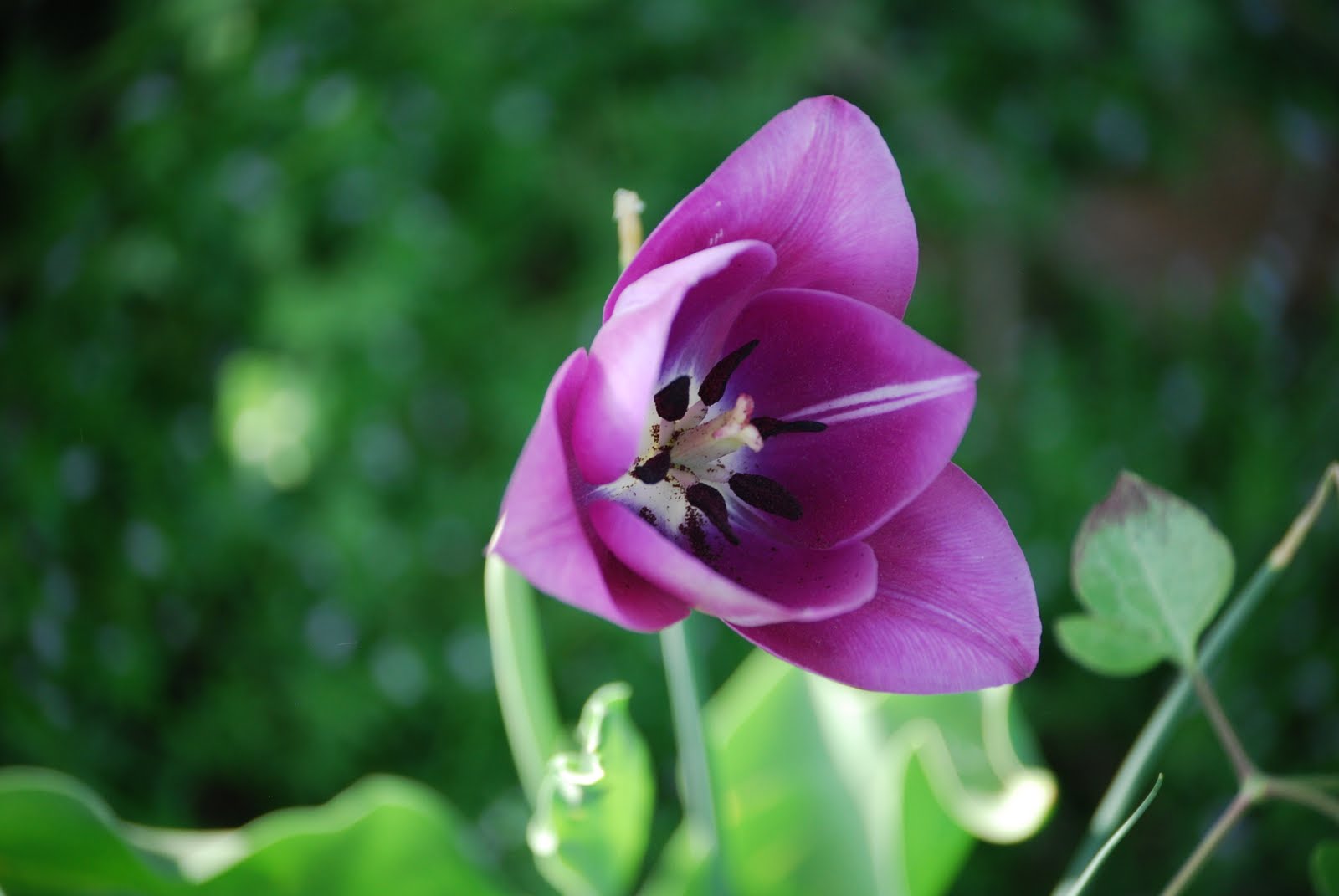
Wisteria blossoms up close.

More tulips.
And our Tulip!

More tulips.

And our Tulip!


Monday, April 19, 2010
International Acclaim
We're very excite here... our site was listed by Dobbies.com as a "Chicken-keeping blog we love!"

How sweet is that?!? Thanks, Dobbies!

How sweet is that?!? Thanks, Dobbies!
Menu for the Week - 4-19-10
Menu for the Week:
- Spinach-basil-vegan ricotta lasagna
- Pesto pizza with onions, garlic, broccoli, olives & sun-dried tomatoes
- Spring vegetable minestrone made with homemade veggie stock
- Spice Roasted Tofu fillets with Israeli vegetable couscous
- Lentil loaf with mashed potatoes, gravy and sauteed greens
Some of these were holdovers from last week. What we had planned made a lot of food. We did really well with not eating out too. I did meet a friend for lunch one day and then we grabbed veggie cheeseless pizza on Friday night because I was home late but other than that, it was all homemade. And delicious.
We made the lasagna last night for dinner and then froze individual portions for lunches the rest of the week. I also made 12 cups of veggie stock which we froze in 4 cup portions to use for the minestrone and just to have.
I really love planning the meals for the week on the weekend and them shopping and cooking on Sunday.
I also made Lavender sables (french butter cookies) with EarthBalance and they came out just the same as with cow's milk butter. And I made my first loaf of Irish Soda Bread which we had for breakfast with a delicious tofu-onion-red pepper scramble and with the lasagna for dinner. I plan on baking more on the weekends too, like I used to.
I'll be adding recipes here but also to the notes section of the Facebook page, so be sure to go by and "fan" it to get all the updates - www.facebook.com/TheDailyCoop.
- Spinach-basil-vegan ricotta lasagna
- Pesto pizza with onions, garlic, broccoli, olives & sun-dried tomatoes
- Spring vegetable minestrone made with homemade veggie stock
- Spice Roasted Tofu fillets with Israeli vegetable couscous
- Lentil loaf with mashed potatoes, gravy and sauteed greens
Some of these were holdovers from last week. What we had planned made a lot of food. We did really well with not eating out too. I did meet a friend for lunch one day and then we grabbed veggie cheeseless pizza on Friday night because I was home late but other than that, it was all homemade. And delicious.
We made the lasagna last night for dinner and then froze individual portions for lunches the rest of the week. I also made 12 cups of veggie stock which we froze in 4 cup portions to use for the minestrone and just to have.
I really love planning the meals for the week on the weekend and them shopping and cooking on Sunday.
I also made Lavender sables (french butter cookies) with EarthBalance and they came out just the same as with cow's milk butter. And I made my first loaf of Irish Soda Bread which we had for breakfast with a delicious tofu-onion-red pepper scramble and with the lasagna for dinner. I plan on baking more on the weekends too, like I used to.
I'll be adding recipes here but also to the notes section of the Facebook page, so be sure to go by and "fan" it to get all the updates - www.facebook.com/TheDailyCoop.
Saturday, April 10, 2010
A Week's Menus - 4-11-10
Menu for the week:
- Salad, green smoothie and baked potatoes
- Spicy Black bean burgers
- Big salad and cornbread
- Veggie stir fry with rice
- Spinach-basil-vegan ricotta lasagna
- Hummus & Grilled veggie sandwiches with garlic-herb "boursin-style" spread
- Grilled Portobellos and asparagus with rice
- Homemade pesto veggie pizzas
- Hummus black bean quesodillas
- Salad, green smoothie and baked potatoes
- Spicy Black bean burgers
- Big salad and cornbread
- Veggie stir fry with rice
- Spinach-basil-vegan ricotta lasagna
- Hummus & Grilled veggie sandwiches with garlic-herb "boursin-style" spread
- Grilled Portobellos and asparagus with rice
- Homemade pesto veggie pizzas
- Hummus black bean quesodillas
Thursday, April 8, 2010
Sharing the Stories
Part of me is not sure what the point is for sharing these horrible, unbelievable stories of abuse and cruelty. But I think that, while they upset and outrage me, it is necessary to share them because they call attention to the link between animal abuse as a gateway to child abuse and other violent crimes including serial killings. They showcase how lax our laws are regarding this type of abuse and how animals are treated as mere property without regard to the suffering endured by these animals and how poor a job we do of protecting these innocents. These mentally disturbed individuals should prosecuted and monitored for the rest of their lives. The laws should be changed.
I hope these stories will help get the laws changed and impact the sentencing of the responsible. And if some karmic retribution comes back to kick their ass, I'd be all for that too. If you can help by donating to the care of this kitty (and the thousands of others hurt each day) that would be great. If you can adopt a rescued or shelter animal, you should. And if you ever see this abuse going on you have an obligation to step in and stop it.
From USA Today -
It's a beautiful day in my neighborhood, but all that sunniness was interrupted when I saw this video. Police are searching for the person who drove a nail through a cat's hind paw and left it hanging from a utility pole in rural Henry County, near Geneseo, Ill.
Local Andrea Bristol found it while driving home, she tells The Dispatch. "It just made me sick to my stomach."
The cat is microchipped, but efforts to reach the owner have been fruitless. If the cat survives, it will be put up for adoption.
Aside from the paw, the cat had head injuries and was dehydrated, according to Karen Russell, president of the Henry County Humane Society-Geneseo. (The Henry County Humane Society-Geneseo says that those who would like to donate toward vet costs can send checks with "abused cat" as the memo to them at P.O. Box 145, Geneseo, IL61254.)
Other stories:
Puppy set on fire by Man in front of his children
Burned and beaten puppy inspiring stronger laws
Tuesday, April 6, 2010
Friends Don't Let Friends: Eat Boxed Cereal
I'm a big fan of cereal. I don't have a Jerry Seinfeld level collection but I could easily eat cereal 3 meals a day. The hubby does not agree with this, so we do have actual food in the house... not due to me generally.
And while I love Grape Nuts, Basic 4, Rice Krispies (with lots of sugar) and Apple-Cinnamon Cheerios (okay and Count Chocula!), I know that even the healthy stuff isn't that great, they're pricey plus they have too much packaging. And we're trying to eliminate the packaging.
So that means it's time to get back to making the delicious, fully customizable granola/cereal I love to make!
This recipe can be adapted to include whatever you want to add. I usually throw in whatever looks good from the bulk section, so please take these amounts as guidelines and feel free to add more of something, less of others etc.
Ingredients:
3 cups Rolled oats
1 cup slivered almonds
1/2 to 1 cup each: chopped pecans, chopped walnuts, macadamia nuts, pepitas, etc.
3/4 shredded coconut
1/3 cup brown sugar
2 Tbl ground cinnamon
1/3 cup maple syrup (I like to dump in some honey as well. You could use molasses too, I'll bet)
1/3 cup canola oil
3/4 tsp salt
1 cup currants (or raisins or dried cranberries or dried blueberries)
Preheat oven to 250 degrees F.
In large bowl combine the oats, nuts, coconut, currants, cinnamon and brown sugar.
In another bowl/measuring cup combine the oil, syrup, honey and salt. Pour this over the dry ingredients and stir to fully cover and combine.
Place the combined ingredients on a large baking sheet (or two depending on size) and pat down. Cook for 1 hr and 15 minutes and take out the sheet(s) every 15 minutes to stir and pat down the mixture to evenly brown. I line my baking sheet with tinfoil because as the mixture cools it will be very sticky.
When done baking, remove pan and place on a wire rack to cool. Before it is fully cool, remove the mixture into a large bowl and stir to cool. As it cools it will stick together some, but you can then easily break it up for easy eating.
Keep in an airtight container and enjoy as cereal or for snacking!
And while I love Grape Nuts, Basic 4, Rice Krispies (with lots of sugar) and Apple-Cinnamon Cheerios (okay and Count Chocula!), I know that even the healthy stuff isn't that great, they're pricey plus they have too much packaging. And we're trying to eliminate the packaging.
So that means it's time to get back to making the delicious, fully customizable granola/cereal I love to make!

This recipe can be adapted to include whatever you want to add. I usually throw in whatever looks good from the bulk section, so please take these amounts as guidelines and feel free to add more of something, less of others etc.
Ingredients:
3 cups Rolled oats
1 cup slivered almonds
1/2 to 1 cup each: chopped pecans, chopped walnuts, macadamia nuts, pepitas, etc.
3/4 shredded coconut
1/3 cup brown sugar
2 Tbl ground cinnamon
1/3 cup maple syrup (I like to dump in some honey as well. You could use molasses too, I'll bet)
1/3 cup canola oil
3/4 tsp salt
1 cup currants (or raisins or dried cranberries or dried blueberries)
Preheat oven to 250 degrees F.
In large bowl combine the oats, nuts, coconut, currants, cinnamon and brown sugar.
In another bowl/measuring cup combine the oil, syrup, honey and salt. Pour this over the dry ingredients and stir to fully cover and combine.
Place the combined ingredients on a large baking sheet (or two depending on size) and pat down. Cook for 1 hr and 15 minutes and take out the sheet(s) every 15 minutes to stir and pat down the mixture to evenly brown. I line my baking sheet with tinfoil because as the mixture cools it will be very sticky.
When done baking, remove pan and place on a wire rack to cool. Before it is fully cool, remove the mixture into a large bowl and stir to cool. As it cools it will stick together some, but you can then easily break it up for easy eating.
Keep in an airtight container and enjoy as cereal or for snacking!
Sunday, April 4, 2010
Becoming the "Less Impact Fam(ily)"
I am a fan of self-improvement. I love to learn and experiment and explore. I read a lot, I try new things, I refuse to stagnate. One of my relaxation treats is to watch documentaries. Lately they have been on food (Food, Inc., Future of Food, King Corn, Earthlings), social and cultural issues and environmentalism. These have always been some of my favorite topics so it was great to watch No Impact Man which combines all of these topics.


What is so neat about watching this movie is that I had read the No Impact Man blog during the time he was embarking on this "experiment". If you aren't familiar with the blog or the movie, Colin embarked on a year-long trial with his wife and child to see how little they could impact the earth. This means they tried to only eat locally, cut out trash, stopped using chemical cleaners, phased out electricty and got around using their own two feet, bicycles or scooter.
The documentary had an inspirational influence on me. We do our best here to lighten our load on the environment. We're vegan for starters, which does create a huge reduction but we also try to be good about the recycling, reusable bags, making stuff from scratch a lot and only one of us commutes to work. We have a high efficiency washer & dryer and only do about 6 loads a month. We haven't used a dishwasher in 10 years. So all that isn't bad to start. But after watching the documentary, we're inspired to try and push ourselves to do a bit more.
So, what are we going to put into place? Well...
- Eliminate eating out, especially take out, unless we're going out for a social occassion with friends or family
- Reduce/Eliminate food packaging by buying in bulk, making stuff on our own (granola for cereal, bread, tomato sauce, almond milk, veggie/bean burgers, etc.) and freezing or storing it in reusable containers. Bring our own reusable bags for shopping and bulk and produce buying.
- Remove our names from all catalogs and ask our banks and bills to go paperless.
- Stop buying commercial cleansers and make ours from natural options including borax, castile soap, baking soda and vinegar
- Use up all of our current stock of food items and personal care items before buying more
- Stop using paper towels (except for pet messes) and swiffer cloths. Instead use sponges and cloth towels, cloth napkins and broom, dust pan and steam mop
- Cut down our overall consuption (HUGE issue!)
- Borrow or barter before buying
- Attempt to reuse/refill packaging before recycling
- Sell or donate items that are just taking up physical and mental space. If they are not getting actively used they need to go.
- Low energy evenings. This means turing out the lights and turning off the TV/games at dusk. We will relax, read, etc. We don't need or want so much sensory input all the time.
- Hold out on turning on the AC or heaters. It's cool in the house now with the windows open, the fans on and the attic fan on. It was above 80 degrees today and we still felt okay in the house. Our goal is to see how long we can go into May before it gets too warm inside.
- Create and maintain our garden. Keep composting but do more such as using our bean soaking water to water the plants.
- Buy most of our produce from the farmer's market. We pretty much do this any ways but we want to be better about eating seasonally.
- Install a clothes line to dry some of our laundry
- Work on house projects we have the stuff for but have been putting off.


It seems like a lot but I don't think it will be that difficult. These are all things we like and want to do but we just have not sat down and decided to to do them. We have a few things we need to put into place, like the clothing line and some window fans, but these are all doable.
We'll keep you informed with what's working and what isn't. What are something you would like to do or suggest to us?
Subscribe to:
Posts (Atom)